
Climbing Mount Elbrus from the northern side
Choose a convenient date below to view the schedule.
from June 13, 2027, to June 22, 2027
https://pilgrim-tours.ru/en-nord-130627
from July 4, 2027, to July 13, 2027
https://pilgrim-tours.ru/en-nord-040727
from July 25, 2027, to August 3, 2027
https://pilgrim-tours.ru/en-nord-250727
from August 15, 2027, to August 24, 2027
https://pilgrim-tours.ru/en-nord-150827
from September 5, 2027, to September 14, 2027
https://pilgrim-tours.ru/en-nord-050927
Choose a convenient date below to view the schedule.
from June 13, 2027, to June 22, 2027
https://pilgrim-tours.ru/en-nord-130627
from July 4, 2027, to July 13, 2027
https://pilgrim-tours.ru/en-nord-040727
from July 25, 2027, to August 3, 2027
https://pilgrim-tours.ru/en-nord-250727
from August 15, 2027, to August 24, 2027
https://pilgrim-tours.ru/en-nord-150827
from September 5, 2027, to September 14, 2027
https://pilgrim-tours.ru/en-nord-050927
North Route Elbrus Ascent (Camping) 2027
Follow the historic 1829 route on Elbrus's wilder North side in 2027. A challenging camping expedition for those seeking a more remote experience
Tour type: Active
Region: Russia, Kabardino-Balkarian Republic
Duration: 11 days / 10 nights (max)
Season: June – September
Difficulty level: Good physical fitness required
Minimum age: 16 years
Group size: 8-12 participants
Category: F / PD- / PD
Price: about 83 000 RUB in EUR by actual course of the Russian Central Bank
Region: Russia, Kabardino-Balkarian Republic
Duration: 11 days / 10 nights (max)
Season: June – September
Difficulty level: Good physical fitness required
Minimum age: 16 years
Group size: 8-12 participants
Category: F / PD- / PD
Price: about 83 000 RUB in EUR by actual course of the Russian Central Bank
Free consultation
Get a free consultation from our experts and learn all the details about climbing Elbrus and Kazbek
Stavropol Krai,
Pyatigorsk, Kalinin Ave., 42 V
Phone:
+7 (495) 108-40-07
+7 (938) 701-13-80
Email:
pilgrim-tours@yandex.ru
Pyatigorsk, Kalinin Ave., 42 V
Phone:
+7 (495) 108-40-07
+7 (938) 701-13-80
Email:
pilgrim-tours@yandex.ru
By clicking the button, you consent to the processing of personal data and agree to the privacy policy
Route Map

Acclimatization schedule

Elbrus North Route Ascent — Camping Program
This option is for those ready to leave civilization behind. You'll walk the entire route from start to finish on your own feet — just as climbers did nearly 200 years ago — so good physical fitness is essential.
We invite outdoor enthusiasts who want to climb the highest peak in Russia and Europe — following in the footsteps of the first ascensionists!
This option is for those ready to leave civilization behind. You'll walk the entire route from start to finish on your own feet — just as climbers did nearly 200 years ago — so good physical fitness is essential.
We invite outdoor enthusiasts who want to climb the highest peak in Russia and Europe — following in the footsteps of the first ascensionists!
Program Itinerary
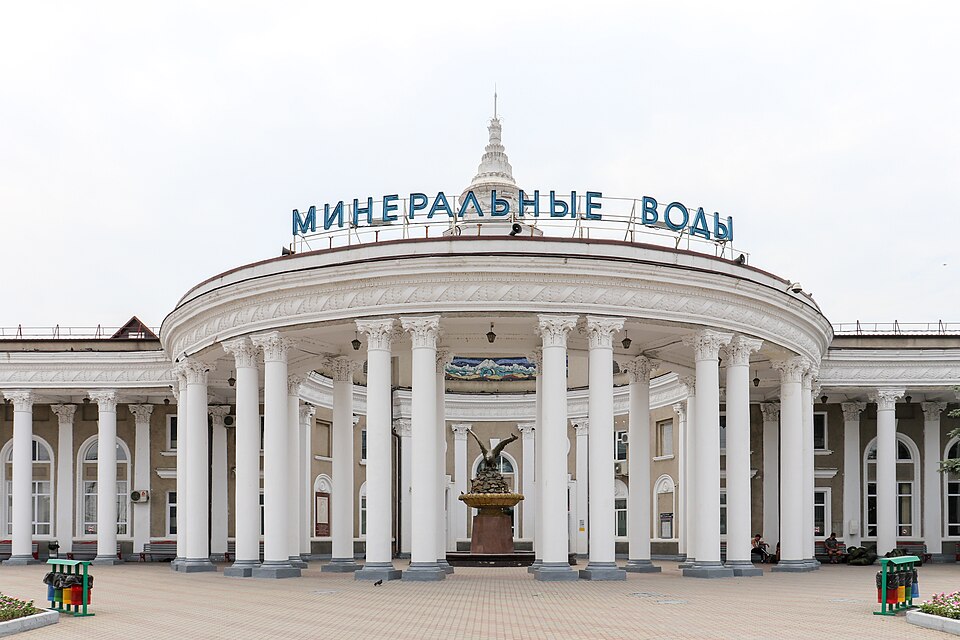
Day 0: Arrival
This day is optional but highly recommended for your comfort.
We will meet you at the airport, at Mineralnye Vody railway station, or at Pyatigorsk railway station, and transfer you to our office in Pyatigorsk.
In a relaxed setting, we will sign all necessary documents and check your gear and clothing for the ascent. If anything is missing, you can rent it on the spot — we have everything you need.
Pyatigorsk is a resort town. You can stay overnight at any of the many hostels or hotels (prices start from 800 RUB).
We will meet you at the airport, at Mineralnye Vody railway station, or at Pyatigorsk railway station, and transfer you to our office in Pyatigorsk.
In a relaxed setting, we will sign all necessary documents and check your gear and clothing for the ascent. If anything is missing, you can rent it on the spot — we have everything you need.
Pyatigorsk is a resort town. You can stay overnight at any of the many hostels or hotels (prices start from 800 RUB).
Day 1: Transfer to Emmanuel's Glade
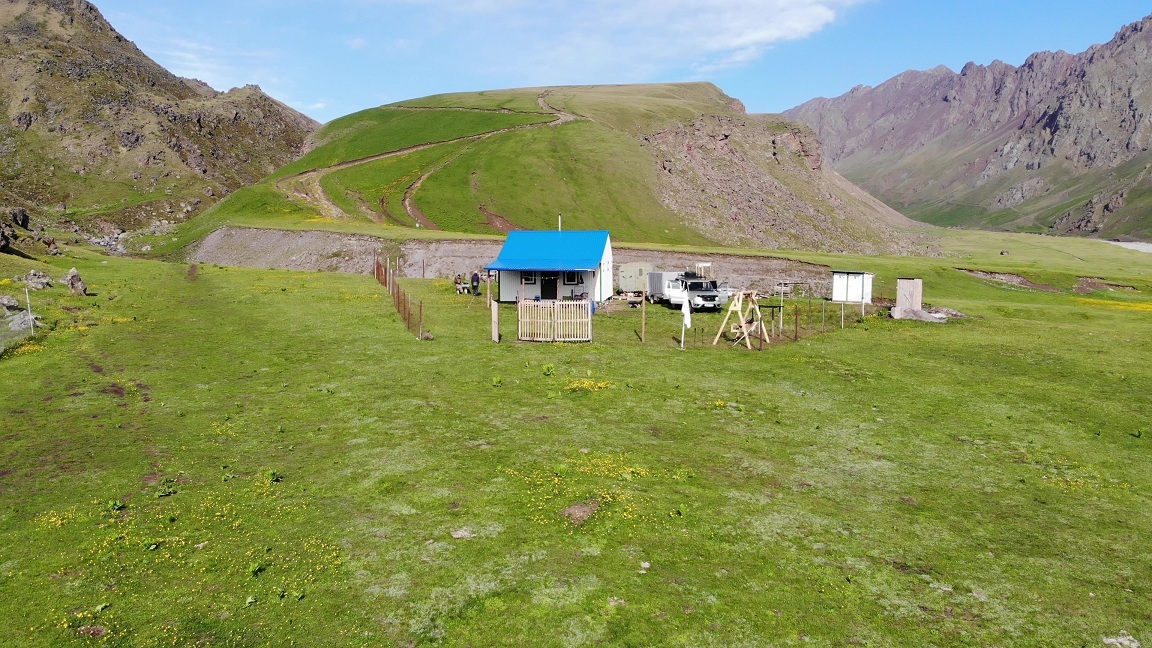
If you chose not to arrive earlier, please be at the office by 10:00 AM.
Briefing at 11:00 AM. Your guide will briefly introduce themselves, give an overview of the tour, explain safety rules and mountain etiquette, and answer your questions.
After that, we depart for the start of the route — to the foot of Elbrus, in the Northern Elbrus region (Emmanuel's Glade, 2,600 m).
Set up the tent camp and prepare dinner. From here, you can admire the snow‑white peaks of the formidable and majestic Elbrus.
Briefing at 11:00 AM. Your guide will briefly introduce themselves, give an overview of the tour, explain safety rules and mountain etiquette, and answer your questions.
After that, we depart for the start of the route — to the foot of Elbrus, in the Northern Elbrus region (Emmanuel's Glade, 2,600 m).
Set up the tent camp and prepare dinner. From here, you can admire the snow‑white peaks of the formidable and majestic Elbrus.
Day 2: Walk around Djily‑Su
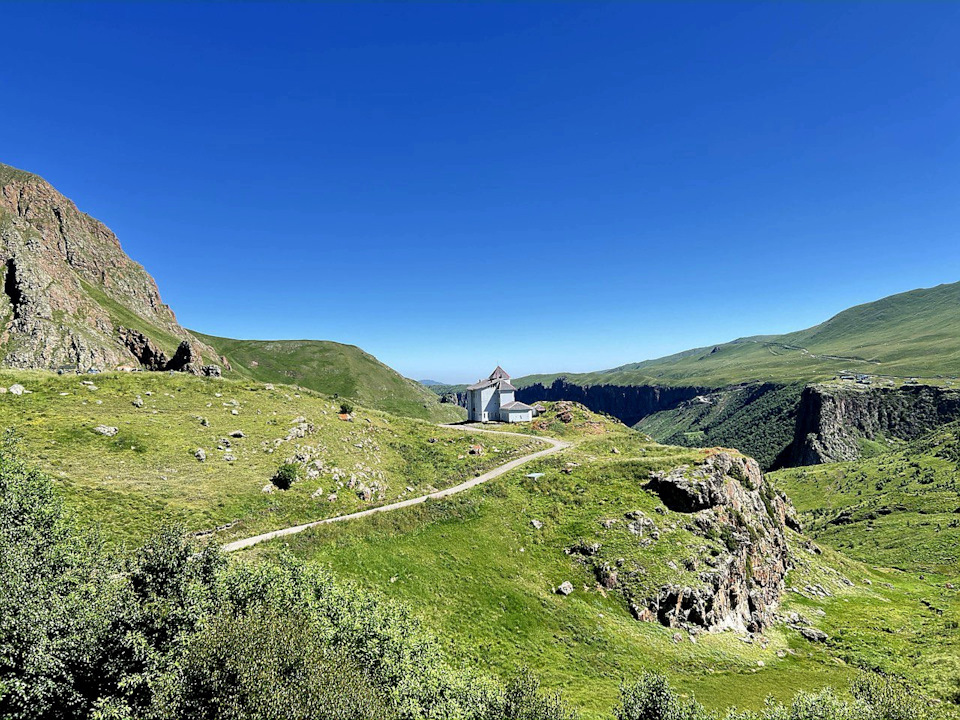
Walk around Djily‑Su → Distance 5.5 km ↑ Elevation 3,014 m
We'll spend the first day in a relatively relaxed mode, allowing you to begin acclimatization. We'll walk light all day through the most interesting spots of the Djily‑Su area.
We'll visit the Sultan Waterfall, the Valley of Stone Castles, take a dip in the narzan springs, see the natural stone bridge in the canyon, and visit Emmanuel's Rock — all in one day.
We'll spend the first day in a relatively relaxed mode, allowing you to begin acclimatization. We'll walk light all day through the most interesting spots of the Djily‑Su area.
We'll visit the Sultan Waterfall, the Valley of Stone Castles, take a dip in the narzan springs, see the natural stone bridge in the canyon, and visit Emmanuel's Rock — all in one day.
Day 3: Acclimatization Ascent to the Stone Mushrooms
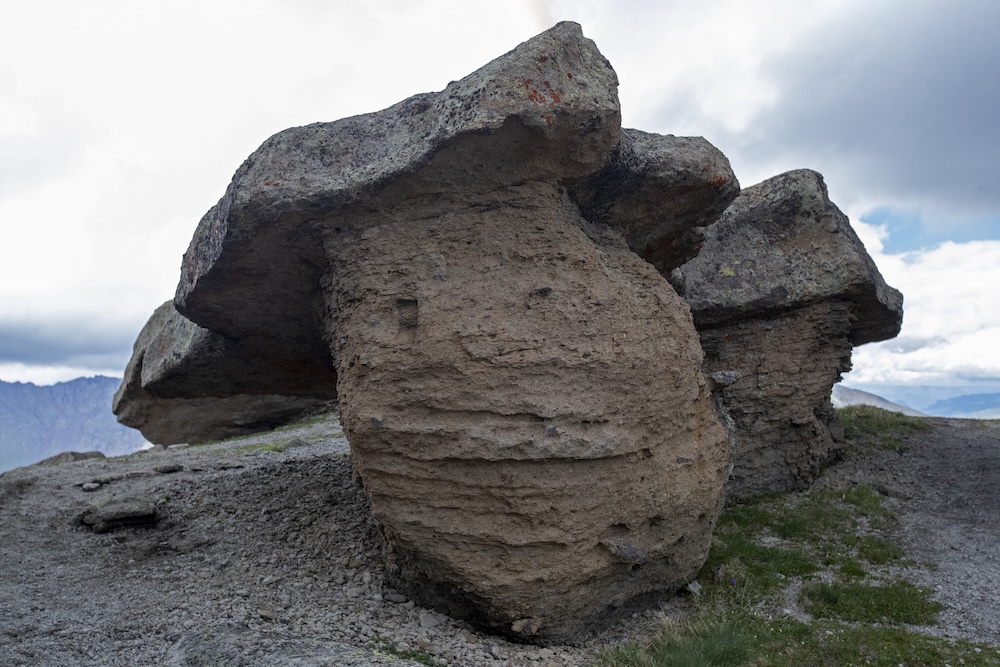
Acclimatization Ascent to the Stone Mushrooms — Elevation 3,165 m
On this day, we'll cache some gear to make it easier to move the entire camp to the next overnight spot tomorrow.
From Emmanuel's Glade, we hike to the former German airstrip, and beyond. The final destination is another amazing natural site — the Stone Mushrooms.
On this day, we'll cache some gear to make it easier to move the entire camp to the next overnight spot tomorrow.
From Emmanuel's Glade, we hike to the former German airstrip, and beyond. The final destination is another amazing natural site — the Stone Mushrooms.
Day 4: Ascent to the Stone Mushrooms
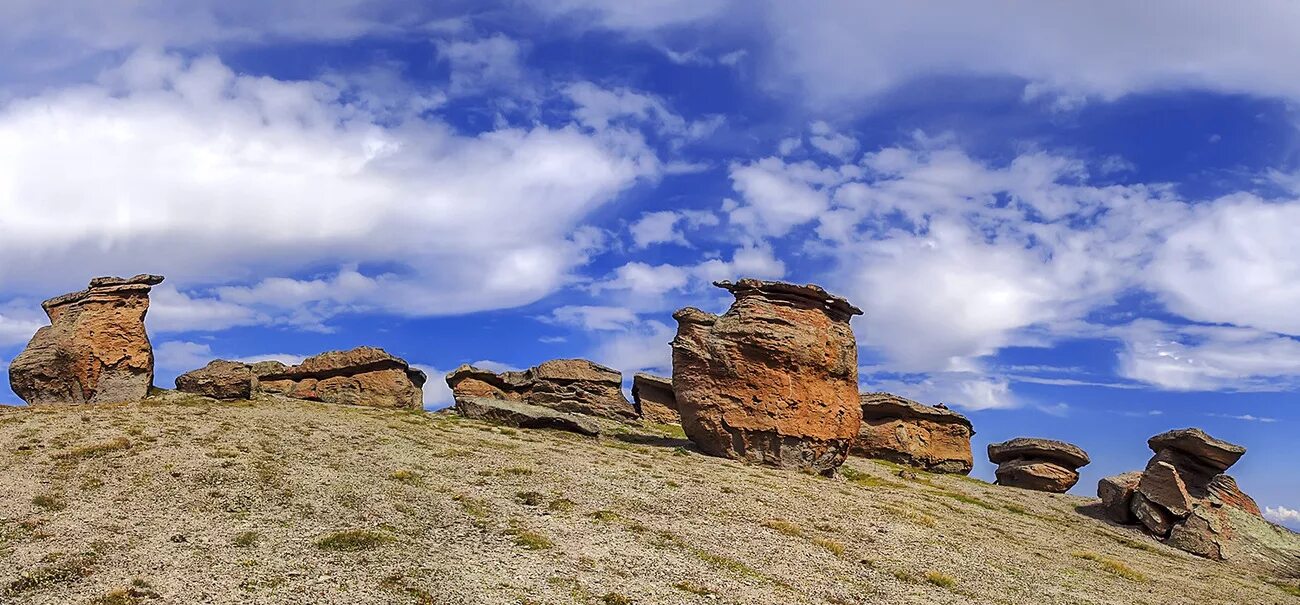
From this day onward, you'll have 2 days of traverses with full backpacks to the upper camp.
Day 5: Transfer to the Assault Camp (3,748 m)
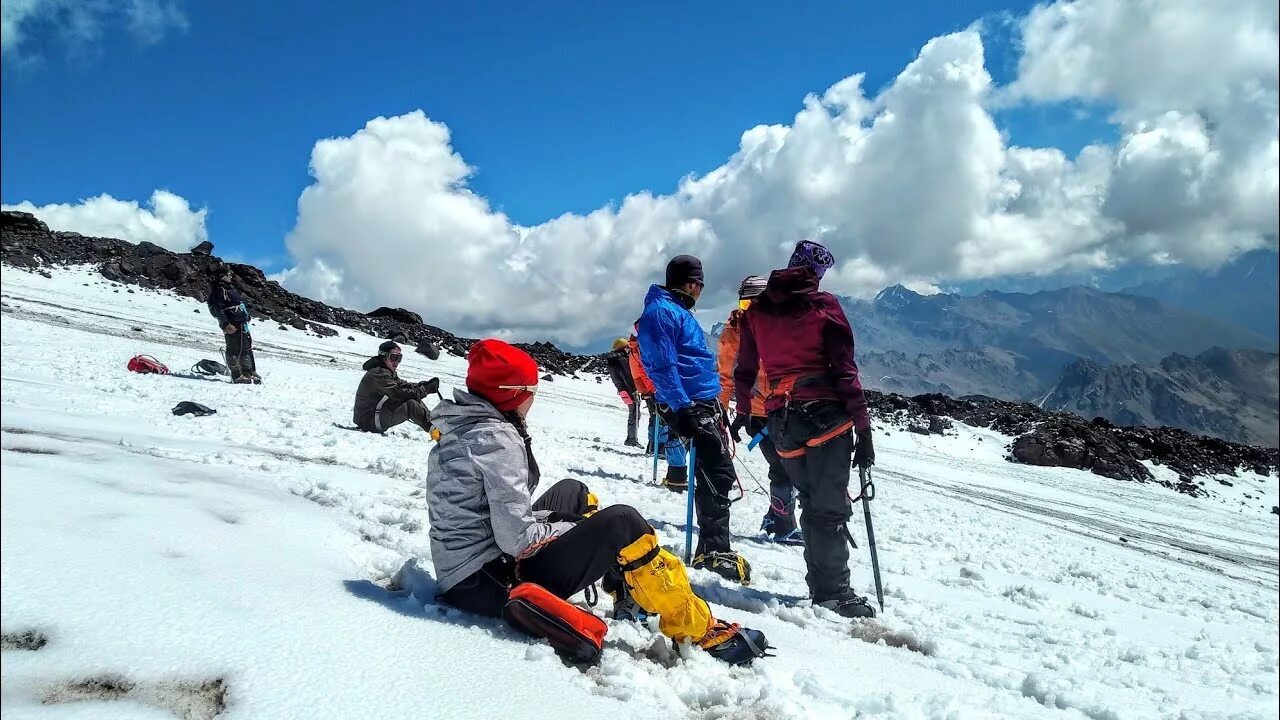
Transfer to the first glaciers of Elbrus's northern slope — Assault Camp at 3,748 m.
We move to the assault camp, where we'll be based for the summit attempt.
We move to the assault camp, where we'll be based for the summit attempt.
Day 6: Main Acclimatization Ascent to 5,000 m
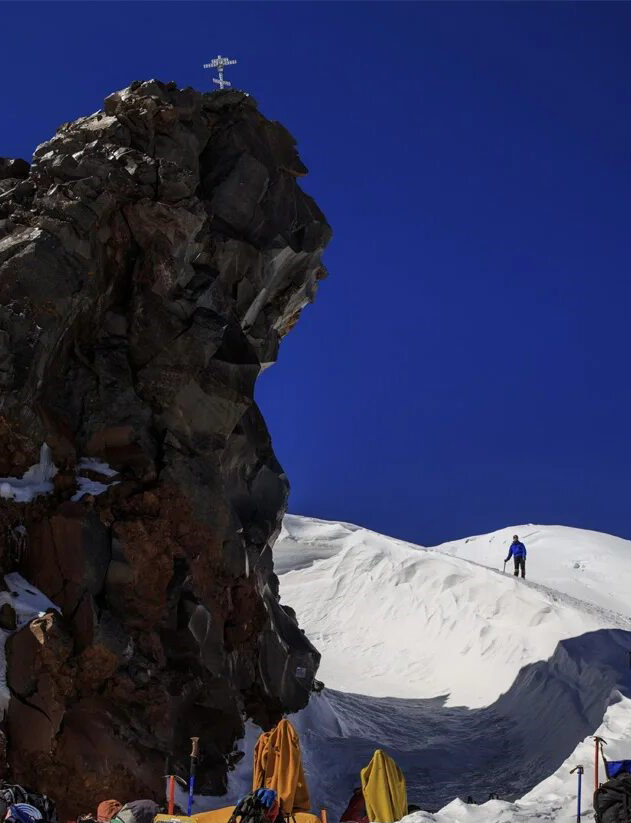
Acclimatization Ascent to Lenz Rocks (5,000 m) — Return to Camp.
We go light. Everyone brings a snack, a thermos with hot tea, and water.
This ascent will give your body the final stimulus it needs to adapt to altitude.
We go light. Everyone brings a snack, a thermos with hot tea, and water.
This ascent will give your body the final stimulus it needs to adapt to altitude.
Day 7: Rest Day at 3,748 m
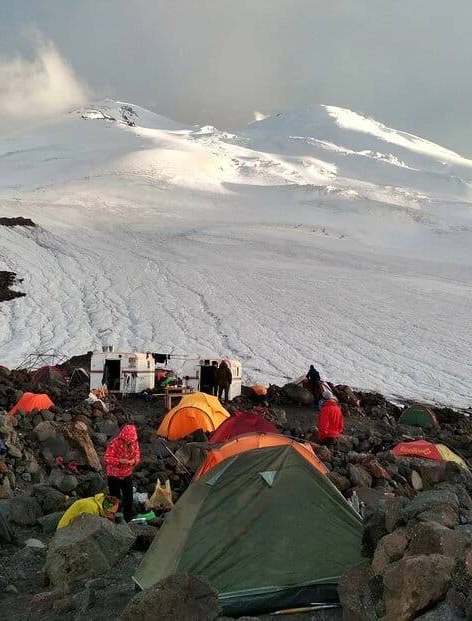
Rest day before the summit push. We'll have practical training sessions: crampon walking, rope team movement, and self‑arrest technique.
Early lights‑out so everyone gets enough sleep.
Early lights‑out so everyone gets enough sleep.
Day 8: Elbrus Summit Day
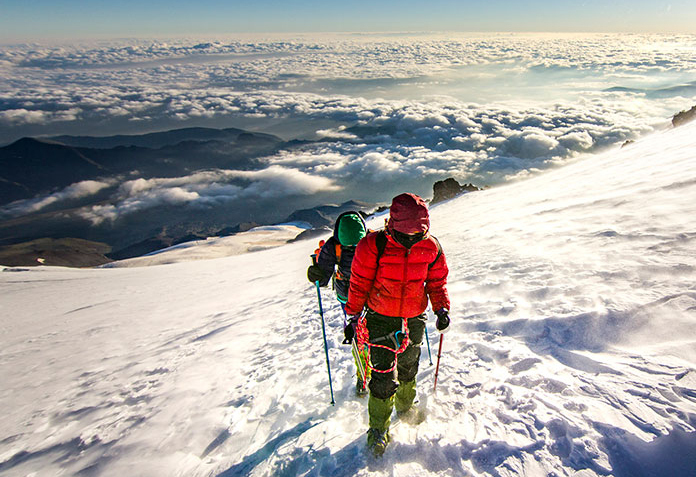
Wake up at midnight.
1.5 hours to get ready. From the assault camp, we go in rope teams, in crampons, with helmets, ice axes, and headlamps.
We move at a slow, steady pace to maintain breathing and conserve energy.
The ascent takes 8–12 hours; descent takes about 3–4 hours.
1.5 hours to get ready. From the assault camp, we go in rope teams, in crampons, with helmets, ice axes, and headlamps.
We move at a slow, steady pace to maintain breathing and conserve energy.
The ascent takes 8–12 hours; descent takes about 3–4 hours.
Day 9: Packing Up — Descent to Emmanuel's Glade — Return to Pyatigorsk
Pack up the tent camp. Descend to Emmanuel's Glade. Return to Pyatigorsk.
The tour may finish 1–2 days earlier depending on whether reserve days were used.
The tour may finish 1–2 days earlier depending on whether reserve days were used.
Days 10: Reserve Days
Reserve days will be used if weather or other circumstances prevent the summit attempt on the planned day, at the guides' discretion.
6 factors of trust
How Pilgrim Tours ensures safety for climbers
during the ascent?
during the ascent?
- Experienced guidesOur guides are professionals with years of climbing experience, ready to ensure your safety.
- Quality equipmentWe offer a wide selection of well-maintained rental gear that meets high standards.
- Satellite phones & navigation systemsSafety and comfort are our top priority. We equip our guides with the best gear to maintain safety and peace of mind.
- Medical qualificationSeveral doctors are on call around the clock for consultations, and your guide is trained in first aid for climbers.
- Individual approachWe offer seven climb options to suit groups of different sizes and skill levels.
- Strict safety standardsAll our routes are designed with participant safety and comfort in mind.
What's Included in the Tour
1. Standard Pilgrim-Tours Package
A. Safety & Medical Support:
A. Comfort (South)
What's Included in the Tour
1. Universal List
A. Comfort (South)
1. Standard Pilgrim-Tours Package
A. Safety & Medical Support:
- Satellite phone, two‑way radios, GPS navigator, first‑aid kit, registration with the Ministry of Emergency Situations (MES).
- Pulse oximeter (daily oxygen saturation monitoring).
- Oxygen equipment for assistance in case of altitude sickness.
- Direct communication with the company physician (satellite or cellular).
- Ropes, ice screws, and all other group technical certified equipment.
- Expert consultations at every stage (gear selection, program details, communication formats).
- Services of professional mountaineering instructors (ratio 1:3–1:4).
- All transfers as per the program.
- Individual meet‑and‑greet at Mineralnye Vody airport or railway station / Pyatigorsk railway station (round trip).
- Luggage storage for personal belongings during the tour.
- Up to 30% discount on personal gear rental.
- Certificate from Pilgrim‑Tours.
- Entry in the official Climber's Record Book (upon successful ascent).
- Official numbered badges "For the Ascent of Elbrus"* and "For the Ascent of Kazbek"* from the Russian Mountaineering Federation.
- Commemorative medals "For Participation in the Ascent of Kazbek"* and "For Participation in the Ascent of Elbrus"*.
- — Badges, medals, and record book entries vary depending on the specific program.
A. Comfort (South)
- 3 nights in a hostel in the Elbrus region + 3–5 nights at the high‑altitude "Pilgrim" hut (stationary shelter).
- Services of a high‑altitude chef.
- Full three meals a day (from dinner on Day 1 to breakfast on the day of return).
- Uphill/downhill transport of gear by snowcat or snowmobile.
- All cable car rides on Elbrus and Cheget included.
- If the cable car is shut down, vehicle transport is provided as a replacement (with recalculation and additional charge for the replacement).
- National Park entry fee (Elbrus region) + snowcat ride for gear transport.
- A spot in a tent.
- Tent camp site fee at Emmanuel's Glade (Days 1–3).
What's Included in the Tour
1. Universal List
- Travel to/from Mineralnye Vody / Pyatigorsk from your home city.
- Rental of personal mountaineering gear (crampons, ice axes, harness systems, etc.).
- Additional services at accommodation sites (sauna, horseback rides, helicopter, excursions not included in the program).
- Individual transfers (outside the group program).
- Accident insurance (to be arranged separately).
- Services of private guides (1‑on‑1 personal guide).
- Permit for the ascent (currently not required).
A. Comfort (South)
- Snowcat for acclimatization and summit night (from 14,000 RUB/person).
- Porter service for luggage on the cable car.
- Meals (either bring your own food package or purchase a pre‑arranged package — additional cost 17,000–18,000 RUB).
- Uphill snowcat/cable car transport (only descent is included; uphill is an additional charge).
- No hut or hostel accommodation provided.
- No private tent provided by the organizers (only a spot in a shared tent).
Peak impressions
Elbrus and Kazbek are so beautiful that a dozen photos say more than a whole page of text
Frequently asked questions
We've gathered the most common questions from travelers — and the answers
Weather is one of the key factors that determines the outcome of an ascent.
May and June are the most beautiful months: the meadows bloom, and there's still winter snow on the peaks.
July brings true summer weather — the optimal time for climbing.
August offers good weather too, but it's very warm, streams run down the slopes, and there are many climbers.
Early autumn often brings near-summer weather with fewer people.
May and June are the most beautiful months: the meadows bloom, and there's still winter snow on the peaks.
July brings true summer weather — the optimal time for climbing.
August offers good weather too, but it's very warm, streams run down the slopes, and there are many climbers.
Early autumn often brings near-summer weather with fewer people.
Elbrus
The climbing season starts in May and lasts through September.
The most favorable months in terms of weather are July and August.
For scenery, June stands out — the mountains still sparkle with snow, and the meadows are covered in wildflowers.
Kazbek
The climbing season starts in June and lasts through September.
Statistically, July and August are the most favorable months. June is noted for its scenery, but this is more subjective than a universal recommendation.
The climbing season starts in May and lasts through September.
The most favorable months in terms of weather are July and August.
For scenery, June stands out — the mountains still sparkle with snow, and the meadows are covered in wildflowers.
Kazbek
The climbing season starts in June and lasts through September.
Statistically, July and August are the most favorable months. June is noted for its scenery, but this is more subjective than a universal recommendation.
South route
The most popular and accessible route. Starts near Terskol village and the Azau clearing. Infrastructure is well developed: cable cars (from Azau to Gara-Bashi station at 3,780 m), hotels, and mountain huts with heating and electricity. This allows for comfortable acclimatization and rest before the summit push.
The route passes through Priyut 11, Pastukhov Rocks, and the saddle of Elbrus (5,200 m). Final point: West Summit (5,642 m) or East Summit (5,621 m). With good fitness, it's possible to summit both in one climb ("the little cross").
Difficulty: 1B (international grading). Suitable for beginners — the route is relatively gentle, and snowcats can take you up to around 5,000 m.
North route
A more "sporting" option requiring self-sufficiency and preparation. The route follows the path of the first ascensionists from 1829. No cable cars or snowcats, minimal infrastructure. Base camp is typically set up at 3,800 m, with camping or stationary huts.
Key features:
One of the most challenging and scenic routes. Starts near Elbrus village, passing through the Irikchat river valley, alpine meadows, the permanent snow zone, the Achkeryakol lava flow, and the Dzhikaugenkez ice plateau.
Key features:
The most popular and accessible route. Starts near Terskol village and the Azau clearing. Infrastructure is well developed: cable cars (from Azau to Gara-Bashi station at 3,780 m), hotels, and mountain huts with heating and electricity. This allows for comfortable acclimatization and rest before the summit push.
The route passes through Priyut 11, Pastukhov Rocks, and the saddle of Elbrus (5,200 m). Final point: West Summit (5,642 m) or East Summit (5,621 m). With good fitness, it's possible to summit both in one climb ("the little cross").
Difficulty: 1B (international grading). Suitable for beginners — the route is relatively gentle, and snowcats can take you up to around 5,000 m.
North route
A more "sporting" option requiring self-sufficiency and preparation. The route follows the path of the first ascensionists from 1829. No cable cars or snowcats, minimal infrastructure. Base camp is typically set up at 3,800 m, with camping or stationary huts.
Key features:
- No marked trail on the ascent;
- The summit push starts from the assault camp in rope teams;
- Summiting the East Peak (5,621 m);
- Weather is more unpredictable than in the south — starts are planned earlier to return by 12–1 PM.
- Difficulty: 2A. Suitable for those ready for tent living.
One of the most challenging and scenic routes. Starts near Elbrus village, passing through the Irikchat river valley, alpine meadows, the permanent snow zone, the Achkeryakol lava flow, and the Dzhikaugenkez ice plateau.
Key features:
- No roads or mountain huts;
- The entire route is covered with a full backpack, with no base camp for rest or radial trips;
- Requires rope team skills and experience crossing icy sections up to 30–35 degrees;
- Assault camp can be set up at 4,200–4,300 m;
- Duration: 10–12 days — the first three days are the approach, the rest is the climb itself.
- Difficulty: 2A. Recommended for climbers in good physical condition.
Elbrus and Kazbek are two iconic Caucasus peaks popular with climbers. While both require preparation, there are significant differences between them.
1. Elevation and acclimatization
1. Elevation and acclimatization
- Elbrus is the highest mountain in Russia and Europe: West Summit — 5,642 m, East Summit — 5,621 m. The greater height requires a longer acclimatization period — typically 7–10 days. Risk of altitude sickness is higher.
- Kazbek is lower: its height is 5,033 m. Acclimatization is easier and faster, but still necessary — at least 5–6 days.
- Elbrus. The classic south route is considered relatively straightforward, graded 1B (Russian classification). The main challenges are altitude and weather, not technical difficulty. There's a cable car and mountain huts (from 3,800 m to 4,050 m), which makes the ascent easier.
- Kazbek. The climb is technically more demanding, graded 2B. The route includes rocky sections, steeper slopes, and requires basic rope and ice axe skills.
- Elbrus. Well-developed infrastructure: cable cars, numerous mountain huts, and rescuers are close to the route. This makes it more accessible for beginners.
- Kazbek. Less developed infrastructure. Routes are more autonomous and require greater self-reliance.
- Elbrus. Weather is unstable, with frequent winds and snowstorms. Optimal season: May to October, peak — July–August.
- Kazbek. Similar climate, but its location closer to the Black Sea means more frequent precipitation. Best period: June to September.
- Elbrus. One of the most popular routes in Russia. Thousands of climbers summit every year.
- Kazbek. Less popular than Elbrus, which offers a greater sense of solitude. Ideal for those seeking a more authentic, autonomous experience.
The most important and demanding part of preparation is physical training.
We provide training programs for our participants.
Join our preparation course for climbing Elbrus and Kazbek!
We provide training programs for our participants.
Join our preparation course for climbing Elbrus and Kazbek!
Most people who come to summit with us are beginners. And that doesn't stop them from reaching their goal.
From day one, our guides teach participants walking techniques — first on trails, then on snow and ice. We constantly explain how to breathe properly and what to pay attention to during ascents.
Before the summit push, we run training sessions on group coordination in rope teams, teach how to use ice axes and trekking poles, and practice proper crampon walking technique.
Together, we can do it!
From day one, our guides teach participants walking techniques — first on trails, then on snow and ice. We constantly explain how to breathe properly and what to pay attention to during ascents.
Before the summit push, we run training sessions on group coordination in rope teams, teach how to use ice axes and trekking poles, and practice proper crampon walking technique.
Together, we can do it!
We provide alpine equipment rental for our participants. Detailed information — including a rental calculator — is available on a separate page.
All participants who summit Elbrus or Kazbek receive an ascent certificate and a climber's record book. Participants on the Premium package receive a numbered badge "For the ascent of Elbrus" / "For the ascent of Kazbek" from the Russian Mountaineering Federation and a commemorative medal.
Standard package participants can purchase the badge and medal at the office.
Standard package participants can purchase the badge and medal at the office.
The meeting takes place in Mineralnye Vody and Pyatigorsk.
After the meeting, the assembly point is: Stavropol Krai, Pyatigorsk, Kalinin Ave., 42 V.
Premium package participants are picked up from train stations and the airport by company transport. Standard package participants make their own way to the meeting point.
After the meeting, the assembly point is: Stavropol Krai, Pyatigorsk, Kalinin Ave., 42 V.
Premium package participants are picked up from train stations and the airport by company transport. Standard package participants make their own way to the meeting point.
This is a matter directly related to safety.
In our groups, the ratio is typically 3–4 participants per guide — never more than 4.
For oxygen tours, the ratio is 1–2 participants per guide.
In our groups, the ratio is typically 3–4 participants per guide — never more than 4.
For oxygen tours, the ratio is 1–2 participants per guide.
- Meals at cafes and purchases not included in the program.
- Activities not included in the tour program (sauna, horseback rides, etc.).
- Gifts, souvenirs, pocket expenses.
Free consultation
Get a free consultation from our experts and learn all the details about climbing Elbrus and Kazbek
Stavropol Krai,
Pyatigorsk, Kalinin Ave., 42 V
Phone:
+7 (495) 108-40-07
+7 (938) 701-13-80
Email:
pilgrim-tours@yandex.ru
Pyatigorsk, Kalinin Ave., 42 V
Phone:
+7 (495) 108-40-07
+7 (938) 701-13-80
Email:
pilgrim-tours@yandex.ru
By clicking the button, you consent to the processing of personal data and agree to the privacy policy
The site uses cookies. By staying on the site you agree to the privacy policy